DARKNESS
The first MKID-based integral field spectrograph for high-contrast direct imaging of exoplanets at Palomar Observatory.
Overview
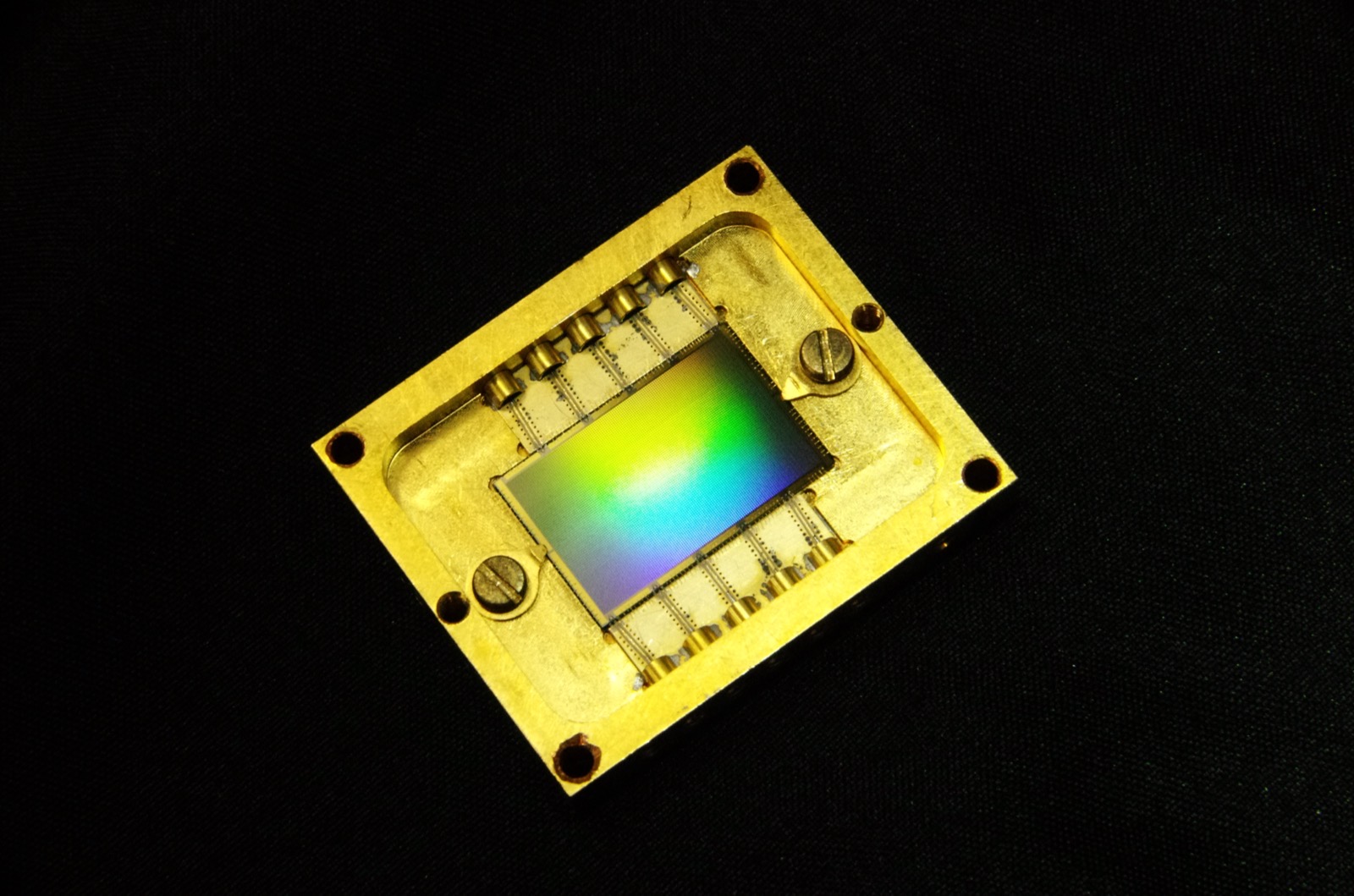
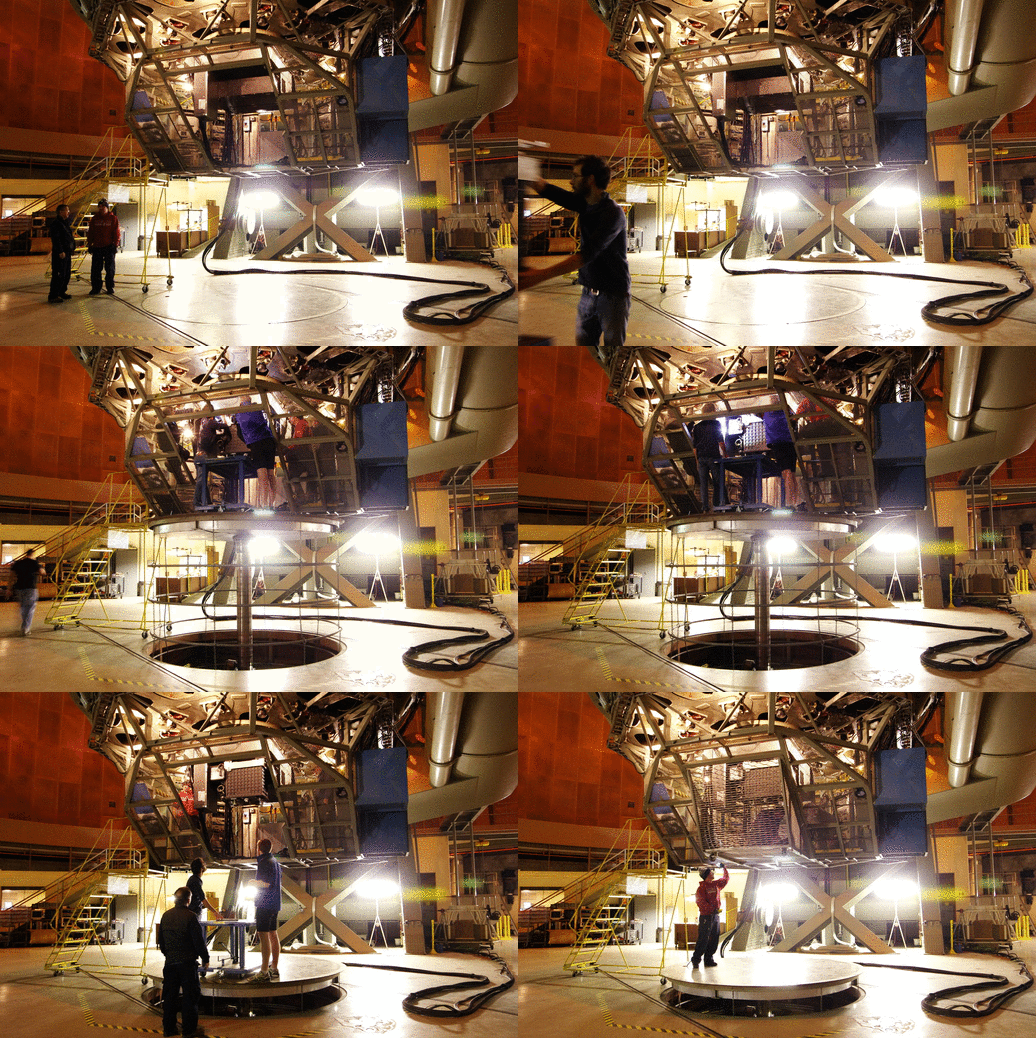
DARKNESS was the first MKID-based integral field spectrograph designed specifically for high-contrast direct imaging of exoplanets. Using our revolutionary Optical/Near-IR Microwave Kinetic Inductance Detectors (MKIDs), DARKNESS integrated with the existing Stellar Double Coronagraph (SDC) at the Palomar 200" Hale Telescope. With 10,000 pixels operating from 800–1,400 nm, DARKNESS represented a 5× increase in array format over ARCONS while targeting one of the most demanding applications in observational astronomy.
Advantages Over Conventional IFUs
DARKNESS improved the star-to-planet contrast ratio over conventional integral field units through three key capabilities:
-
Simplified optical design with high throughput — The MKID array replaces dispersive optics, lenslet arrays, and detector read electronics with a single cryogenic device, reducing the number of optical surfaces and associated throughput losses.
-
Spectral speckle suppression — Operating from 800–1,400 nm with energy resolution R~10 at 1 µm, DARKNESS enables spectral differential imaging to suppress quasi-static speckles that mimic planet signals in broadband coronagraphic images.
-
Photon-counting with zero read noise and zero dark current — Individual photon detection with microsecond timing enables both active speckle control via focal-plane wavefront sensing and time-domain speckle discrimination (Stochastic Speckle Discrimination, or SSD), using the non-Gaussian statistics of coherent speckle light versus incoherent planet light.
Publications
The DARKNESS commissioning paper is available at: https://doi.org/10.1088/1538-3873/aab5e7
The instrument is also described in the DARKNESS SPIE proceedings.
Funding
Special thanks to the Heising-Simons Foundation and the National Science Foundation for funding DARKNESS.